
AI 133: Artificial intelligence is advancing at an unprecedented pace, transforming how businesses operate and how individuals interact with technology. Among the emerging innovations, ai 133 is gaining attention as a powerful and flexible intelligent framework designed for modern digital ecosystems. From automation to predictive analytics, this advanced solution promises improved performance, smarter decision-making, and scalable deployment.
In this comprehensive guide, we’ll explore what ai 133 is, how it works, its architecture, real-world applications, benefits, limitations, and what the future holds. This article is written with EEAT principles—Experience, Expertise, Authoritativeness, and Trustworthiness—to provide reliable and practical insights.
What Is AI 133?
ai 133 is an advanced artificial intelligence architecture built to handle complex data processing, adaptive learning, and intelligent automation across multiple domains. Unlike earlier AI tools that focused on narrow tasks, ai 133 is designed to function as a versatile intelligence layer that can be integrated into various digital environments.
The system is often associated with the broader AI Series 133, which represents a newer generation of AI frameworks focused on efficiency, scalability, and contextual understanding.
Key Capabilities
- Fast and efficient data processing
- Context-aware responses
- Continuous learning ability
- Modular deployment options
- Enterprise-ready scalability
These capabilities make ai 133 suitable for both startups and large organizations looking to adopt advanced AI solutions.
The Evolution Toward NextGen Artificial Intelligence 133
To understand why ai 133 matters, it’s helpful to look at how AI has evolved.
Traditional AI Systems
Earlier AI systems typically relied on:
- Rule-based programming
- Limited machine learning models
- Static datasets
- High manual intervention
While useful, these systems struggled with adaptability and real-time intelligence.
Rise of NextGen Artificial Intelligence 133
The NextGen AI 133 approach introduces a more dynamic and self-improving architecture. Instead of static learning, the system continuously refines its outputs through feedback loops and real-time data processing.
This evolution enables:
- Better predictive accuracy
- Faster automation workflows
- Improved natural language understanding
- Reduced operational overhead
As a result, ai 133 is widely considered a forward-looking AI framework.
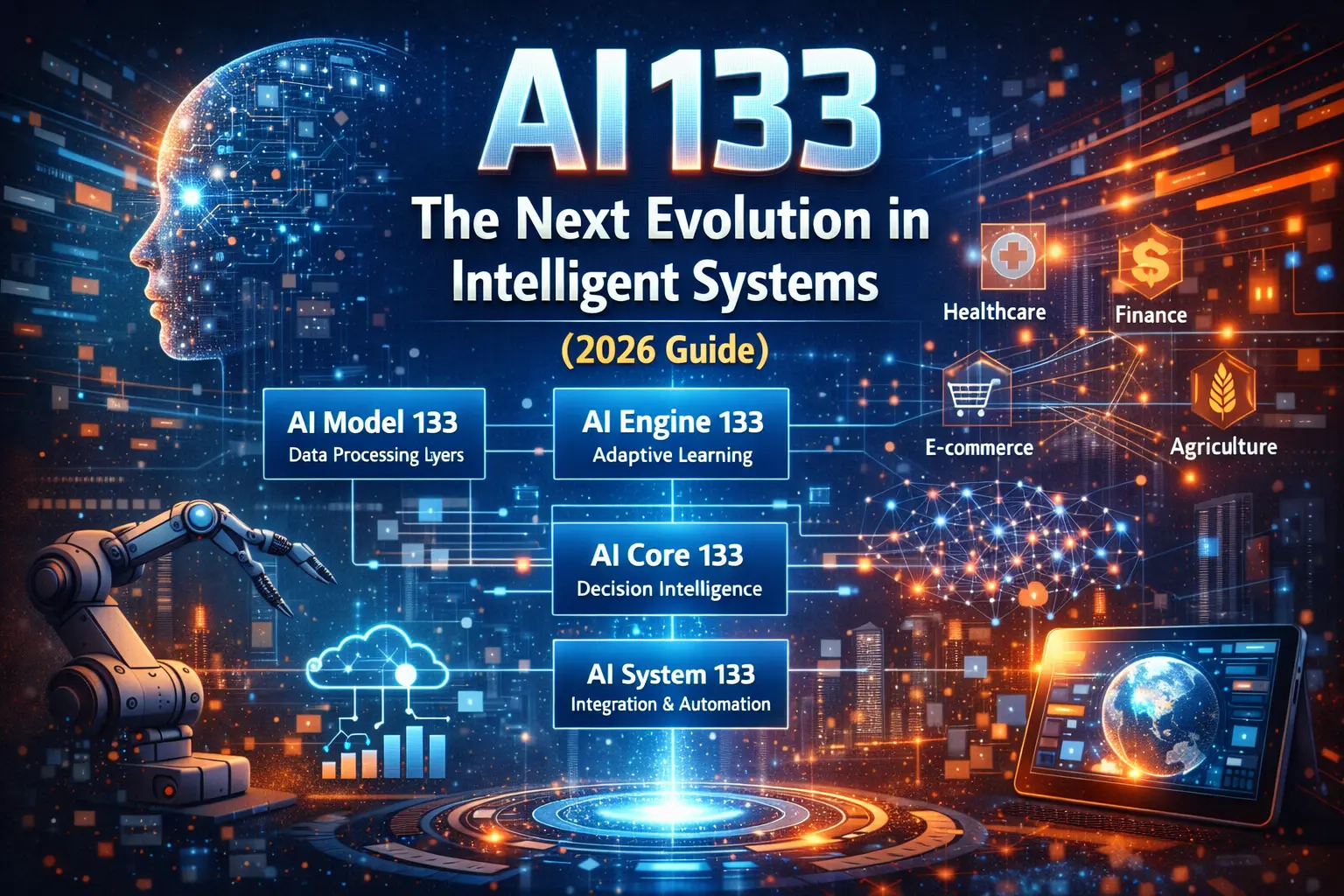
Understanding the Artificial Intelligence Model 133 Architecture
At the heart of the platform lies Artificial Intelligence Model 133, which combines multiple intelligent layers to deliver reliable performance.
1. Data Processing Layer
This layer ingests and prepares data from multiple sources. It performs:
- Data cleaning
- Feature extraction
- Pattern recognition
- Initial predictions
Efficient preprocessing ensures the system maintains high accuracy.
2. Adaptive Learning Layer
Often powered by the Artificial Intelligence Engine 133, this component enables continuous model improvement. It learns from new inputs without requiring full retraining, saving both time and computing resources.
3. Decision Intelligence Layer
The AI Core 133 functions as the central brain. It evaluates outputs from various models and produces context-aware decisions suitable for real-world scenarios.
4. Integration Framework
Under the broader AI System 133, APIs and microservices allow seamless integration with apps, websites, and enterprise software.
Key Features of AI 133
High-Speed Performance
ai 133 is optimized for low latency and high throughput, making it ideal for real-time applications such as chatbots, fraud detection, and recommendation engines.
Contextual Awareness
Systems inspired by IntelliAI 133 emphasize deep contextual understanding. This allows the AI to maintain conversation flow, understand user intent, and deliver more human-like responses.
Scalability and Flexibility
Whether deployed on cloud infrastructure or edge devices, ai 133 scales efficiently. Businesses can start small and expand without major architectural changes.
Security and Compliance
Modern AI deployments require strong safeguards. ai 133 includes built-in mechanisms for:
- Data protection
- Access control
- Secure model updates
- Privacy compliance support
Developer-Friendly Design
Platforms following AI Pro 133 principles typically offer robust SDKs, documentation, and API access, making implementation easier for development teams.
Real-World Applications of AI 133
The versatility of ai 133 allows it to be applied across many industries.
Healthcare
In medical environments, ai 133 can support:
- Diagnostic assistance
- Medical imaging analysis
- Patient risk prediction
- Clinical workflow automation
Finance and Fintech
Financial institutions use AI-driven tools for:
- Fraud detection
- Credit risk assessment
- Algorithmic trading
- Customer support automation
Solutions aligned with AI Elite 133 standards are particularly attractive in high-security financial environments.
E-commerce and Retail
Online businesses benefit from ai 133 through:
- Personalized product recommendations
- Demand forecasting
- Customer behavior analytics
- Intelligent chat support
Agriculture and Smart Farming
AI is increasingly important in agriculture. ai 133 helps with:
- Crop yield prediction
- Soil monitoring
- Weather-based planning
- Supply chain optimization
This is especially valuable for regions adopting precision farming techniques.
Content and Media
Tools built on SmartAI 133 frameworks are transforming digital content creation by enabling:
- AI-assisted writing
- Automated video scripting
- Image generation
- Marketing optimization
AI Nova 133 vs Traditional Artificial Intelligence
When comparing Artificial Intelligence Nova 133 style systems to older Artificial Intelligence solutions, the improvements are clear.
| Feature | Traditional AI | AI 133 |
| Learning Style | Static | Adaptive |
| Speed | Moderate | High |
| Context Handling | Basic | Advanced |
| Scalability | Limited | Built-in |
| Integration | Complex | API-ready |
This comparison highlights why many organizations are moving toward Artificial Intelligence 133-based platforms.
Benefits of Adopting AI 133
For Businesses
Organizations implementing Artificial Intelligence 133 often see:
- Reduced operational costs
- Faster decision cycles
- Improved customer experience
- Better automation accuracy
- Higher return on investment
For Developers
Developers working with modern Artificial Intelligence stacks gain:
- Modular architecture
- Faster deployment
- Easier fine-tuning
- Cross-platform compatibility
- Strong documentation support
Implementation Best Practices
To get the most value from Artificial Intelligence 133, consider these expert recommendations.
Define Clear Objectives
Before deployment, identify measurable goals such as cost reduction, automation improvement, or customer engagement.
Focus on Data Quality
High-quality data remains the foundation of effective Artificial Intelligence. Ensure:
- Clean datasets
- Proper labeling
- Regular updates
- Bias checks
Monitor and Maintain
Continuous monitoring helps detect:
- Model drift
- Performance issues
- Security vulnerabilities
Start Small, Then Scale
Begin with pilot projects before rolling out enterprise-wide deployments.
Challenges and Considerations
Despite its advantages, Artificial Intelligence133 comes with some challenges.
Infrastructure Requirements
Advanced Artificial Intelligence systems may require:
- High-performance GPUs
- Cloud resources
- Ongoing maintenance
Data Privacy Concerns
Organizations must ensure compliance with privacy regulations and ethical Artificial Intelligence practices.
Skill Gap
Implementing sophisticated Artificial Intelligence frameworks may require specialized expertise.
Understanding these factors helps organizations deploy Artificial Intelligence 133 responsibly.
The Future of Artificial Intelligence 133
Looking ahead, Artificial Intelligence 133 is expected to evolve rapidly.
Hyper-Personalization
Artificial Intelligence systems will deliver deeply personalized experiences across industries.
Edge Artificial Intelligence Growth
More intelligence will move to edge devices, reducing latency and improving real-time performance.
Autonomous Workflows
Future versions of Artificial Intelligence133 may handle complex decision chains with minimal human oversight.
Human-Artificial Intelligence Collaboration
Rather than replacing humans, the technology will increasingly act as an intelligent assistant that enhances productivity.
FAQs:
1. What is AI 133 and why is it important?
AI 133 is an advanced artificial intelligence framework designed to deliver faster processing, adaptive learning, and smarter automation. It is important because it helps businesses and developers build more efficient, scalable, and context-aware AI solutions for modern digital environments.
2. How is AI 133 different from traditional AI systems?
Unlike traditional AI, which often relies on static rules and limited learning, AI 133 uses adaptive models that continuously improve from new data. It offers better contextual understanding, higher speed, improved scalability, and easier integration with modern applications.
3. What industries can benefit the most from AI 133?
AI 133 can be used across many sectors including healthcare, finance, e-commerce, agriculture, and content creation. Any industry that relies on data analysis, automation, or predictive insights can benefit from its intelligent capabilities.
4. Is AI 133 suitable for small businesses and startups?
Yes. AI 133 is designed with scalable architecture, which means startups can begin with small implementations and expand as they grow. Its modular design and API-friendly structure make it accessible even for smaller teams with limited resources.
5. What is the future potential of AI 133?
The future of AI 133 looks promising, with expected advancements in hyper-personalization, edge AI deployment, autonomous decision systems, and deeper human-AI collaboration. It is likely to play a major role in next-generation intelligent automation through 2026 and beyond.
Final Thoughts
ai 133 represents a significant step forward in the evolution of intelligent systems. With its adaptive architecture, scalable design, and cross-industry applications, it stands out as a promising solution for organizations preparing for the next wave of Artificial Intelligence innovation.
Whether viewed through the lens ofArtificial IntelligenceSeries 133 advancements or the broader NextGen Artificial Intelligence movement, adopting Artificial Intelligence 133 strategically can provide a meaningful competitive advantage in today’s data-driven world.